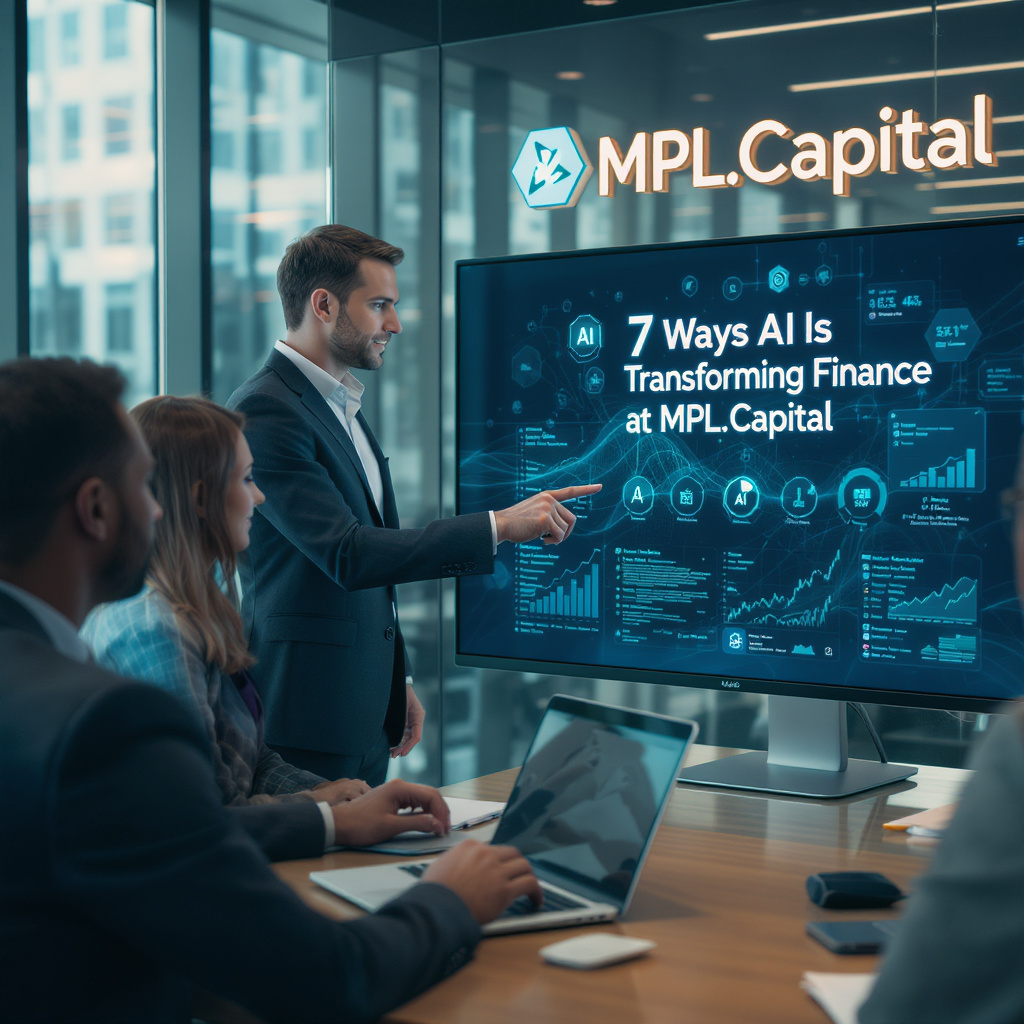
In MPL.Capital, AI enables secure growth through governance, data, and iterative learning. Here are seven practical ways to use AI in finance:
- 1) AI-driven portfolio construction, optimization, and risk controls
Blend multi-objective optimization with dynamic rebalancing and real-time risk signals to guide asset choices and allocations. Include scenario testing and constraint checks to preserve liquidity, align with objectives, and provide interpretable explanations for decisions.
- 2) NLP-based research, earnings-call analysis, and sentiment insights
Automated extraction from earnings calls, reports, and news converts qualitative data into actionable ideas, accelerating idea generation and catalyst identification while noting sentiment noise and coverage caveats.
- 3) Personalization in wealth management
Client profiling and segmentation drive targeted insights and tailored recommendations, with privacy safeguards and lifecycle-focused content to engage clients based on goals and risk preferences.
- 4) Fraud detection, anomaly monitoring, and enhanced security
Behavioral analytics and real-time alerts identify unusual activity across trading, custody, and client interactions; security controls—device checks, identity verification, rapid response—reduce risk while preserving a smooth experience.
- 5) Compliance monitoring and surveillance
AI-based flags for anomalous trades and potential regulatory issues support audit trails and automated reporting, backed by ongoing governance and model-risk management.
- 6) Data quality, governance, and MLOps lifecycle
Data quality checks, metadata standards, lineage tracing, privacy-by-design, consent management, and feature stores ensure reproducibility and safe, scalable experimentation across teams.
- 7) Measurable outcomes: governance, KPIs, and continuous improvement
Adopt a disciplined measurement framework (calibration, backtesting, alpha, decision speed) and tie results to governance gates, risk controls, and ongoing learning for sustained value and trust.